If you have been in business for more than a week, you have heard some version of this.
"We've got ChatGPT now. We'll have a go ourselves."
Or the slightly more generous version: "Just point us in the right direction and we'll use Claude to figure it out."
On the surface it sounds perfectly reasonable. AI is everywhere. ChatGPT, Claude, Gemini and a hundred others are a couple of clicks away, and they are astonishing. The playing field looks completely level.
So here is the question worth sitting with. If everyone has the same tools, why are some businesses saving hundreds of hours, generating qualified leads and pulling ahead, while others pump out forgettable content that vanishes into the internet without a single person noticing?
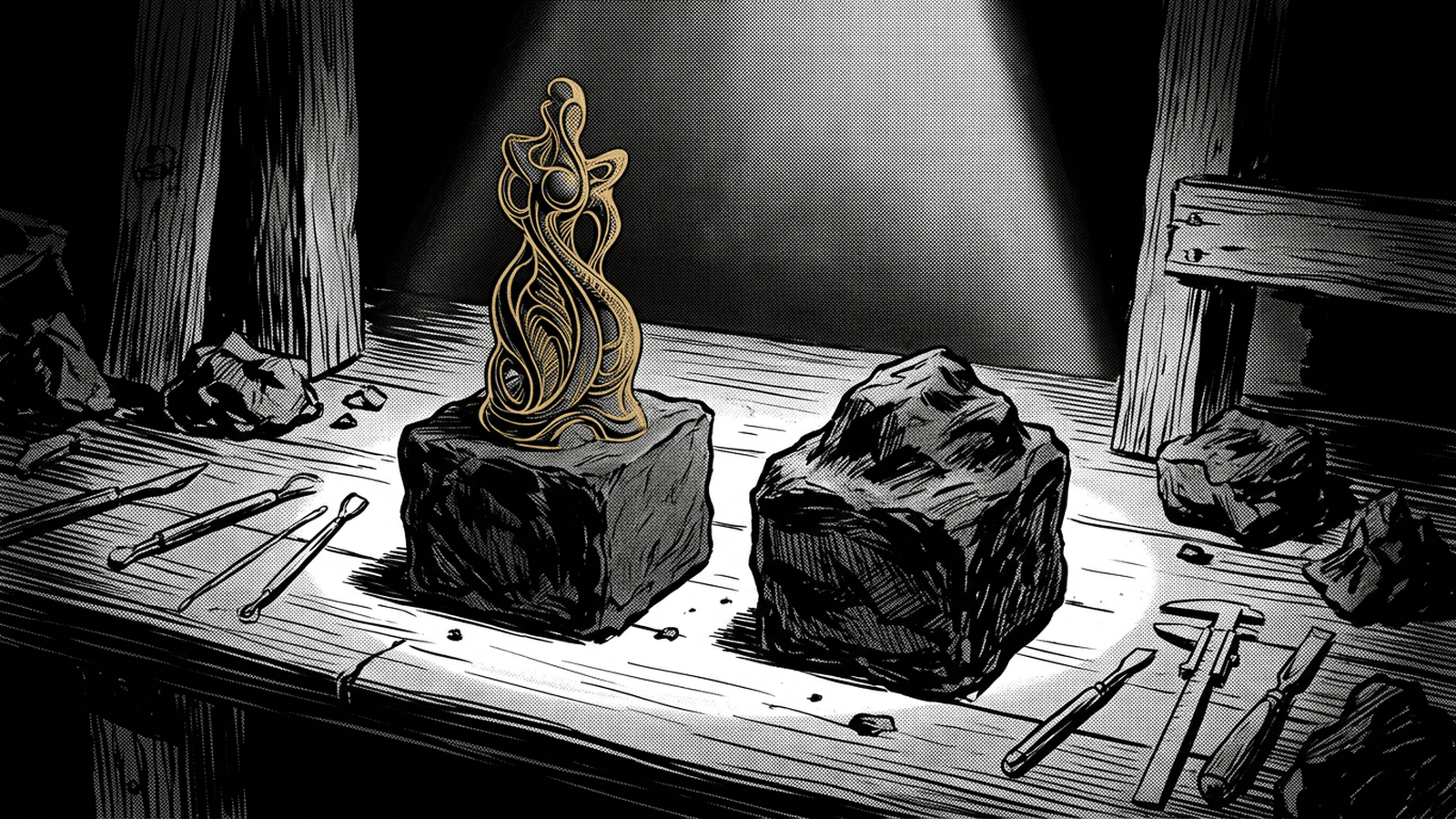
The answer is almost annoyingly simple. It was never about the tool. It is about how you use it to solve a real problem.
I have seen this exact story before
I have spent more than 25 years in marketing, brand strategy and digital, with photography and film woven through all of it. One of the ways I still teach is through Adventure Art Photography, showing people how to actually get something out of their cameras.
And something about those sessions has always fascinated me.
Nobody walks in assuming that buying a professional camera will make them an award winning photographer. Everyone understands, instinctively, that the camera is just a tool. So they learn the things that actually matter. Composition. Light. Timing. Storytelling. How to see a scene that everyone else walks past, and make a decision that turns it into something people remember.
Here is the part that gives the game away. Nobody expects the engineer who designed the camera sensor to teach them any of that. The people who build cameras and the people who know how to use them are completely different specialists, and we all accept that without a second thought.
Somehow, with AI, we forgot.
Building AI and using AI are not the same skill
The engineers at OpenAI, Anthropic and Google are doing extraordinary work. They are solving problems most of us will never fully understand. That is their expertise, and it is remarkable.
Mine is a different job. I do not build AI models, the same way I do not manufacture cameras. What I understand is how businesses communicate, win customers, build marketing systems and solve problems creatively.
Knowing how a large language model works under the hood does not make someone a marketing strategist. Understanding neural networks does not tell you how to fix a leaky customer journey. And having ChatGPT open in a tab does not quietly turn a business owner into an expert in SEO, content strategy or lead generation.
Different skills. They always were.
Owning the tool has never been the advantage
Think about it for a second.
Every accountant owns a calculator. Every carpenter owns a drill. Every designer owns the same software. Every business on earth has email. None of that has ever been the advantage. Knowing what to do with it is.
AI is no different. The businesses getting exceptional results have not stumbled onto a secret model nobody else knows about. They are asking sharper questions, spotting better opportunities and solving more valuable problems. The AI just helps them execute faster.
The same tool, two very different outcomes
Picture two businesses in the same industry. Both have ChatGPT. Both have a website. Both want more customers.
Business A asks the AI, "Write me a blog about plumbing services." Thirty seconds later they have an article. They publish it. Nothing happens.
Business B starts somewhere else entirely. Before writing a word, they ask:
- What are customers actually Googling before they call?
- What misconception is stopping people from booking?
- Which problems are competitors quietly ignoring?
- What would genuinely help someone who is stuck right now?
- What builds enough trust that the phone rings later?
Now the AI becomes something completely different. Not a writer, but a research assistant, a strategist, an editor, a brainstorming partner, a planner. The article that comes out the other end answers real questions, targets real search intent, and pulls in people who are already looking for the answer.
Same AI. Completely different result. The difference was never the software. It was the thinking that came before it.
SEO has changed. Strategy hasn't.
A lot of people are quietly worried that AI has killed SEO. I don't buy it.
What has actually changed is that average content is now effortless to produce, which means average content is worth even less than it used to be. Publishing fifty AI generated posts is not a strategy. It is just adding to the pile of things nobody needed.
Search engines, and the AI answer engines people increasingly use instead, are getting relentlessly better at rewarding usefulness, real expertise and genuine value. That does not make strategy less important. It makes it the whole game. The questions get more demanding, not less: what does our audience actually struggle with, what can we say that nobody else can, and how do we become the most helpful answer in the room. AI helps you get there faster. It will not get there for you.
Creativity is still the advantage. Maybe more than ever.
This is the bit people miss, because they think creativity means drawing pictures.
It doesn't. Creativity is solving problems in a way nobody else has thought of. It is spotting a pattern, connecting two unrelated ideas, understanding people, and making a better call than the obvious one. Those skills existed long before AI, and they will still matter long after today's models have been replaced by next year's.
If anything, AI makes them more valuable, not less. When everyone can generate content in seconds, originality gets harder to fake, clear thinking stands out further, and good strategy becomes the thing that actually separates you.
So what do I actually do?
People sometimes assume AI consulting is about teaching prompts. That is a tiny sliver of it.
The real work is helping a business ask better questions in the first place. Finding the repetitive tasks quietly eating hours every week and handing them to a system. Building marketing that works as a connected engine instead of a series of one off campaigns. Using AI to sharpen client communication, attract qualified leads, and spot the opportunities competitors have not noticed yet.
The technology matters. It is just never the starting point. The business problem is.
I go deeper on the hire, build or partner side of this decision in Can AI run your marketing instead of hiring someone, if that is the question you are actually chewing on.
The future belongs to the better thinkers
Every business now holds extraordinary technology in its hands. That is genuinely exciting. But it also means the technology itself has stopped being the differentiator.
What separates you now is how well you think. How well you understand your customers. How creatively you solve their problems. Those are the things that build an advantage that lasts, and AI simply lets you move on them faster.
Buying a professional camera will not make you a great photographer. Downloading ChatGPT will not transform your business. The advantage was never owning the tool. It has always been knowing how to use it to create something worth paying attention to.
That is a skill worth investing in.
If you want an honest read on whether your strategy is solid enough to be worth pointing AI at, start with a free Brand Health Check. Five minutes, personalised, no sales pitch. Or if you would rather see exactly where AI could be doing the heavy lifting in your business, the Small Bee AI audit takes two.
Frequently asked questions
Can I just use ChatGPT myself instead of hiring a consultant?
For plenty of tasks, absolutely, and you should. The tools are genuinely good. What they do not give you is the strategy that decides what is worth doing in the first place. Most business owners do not need someone to run their prompts. They need help asking better questions, building the systems, and pointing all that capability at the right problem. That can be a few days of outside help, not a full time hire.
Has AI made SEO obsolete?
No. It has made average content obsolete, which is a different thing. Search and AI answer engines are getting better at rewarding genuine expertise and usefulness, so thin, generic content is worth less than ever. Strategy, original thinking and real authority matter more now, not less.
Why is my AI generated content not getting results?
Usually because it was produced tool first instead of question first. If you ask AI to "write a blog about X," you get something generic that thousands of others have already published. If you start with what your customers are actually searching for, what stops them buying, and what only you can credibly say, the same tool produces something that ranks, builds trust and brings people in.
Isn't AI consulting just teaching people prompts?
Prompts are a small part of it. The real value is strategic: finding the work worth automating, building marketing systems rather than one off campaigns, improving how you communicate with customers, and spotting opportunities your competitors have missed. The technology is the easy part. Knowing where to point it is the job.
What actually gives a business an advantage with AI?
Not the model, since everyone has the same ones. The advantage is the thinking around it: clearer strategy, a real understanding of your customers, and the creativity to solve problems in ways others have not. AI makes execution faster, but the judgement is still yours, and that is exactly what makes it valuable.